
Artificial intelligence is becoming part of the fabric of school life. Its presence is visible in classrooms, but its implications extend much further. Questions that begin with teaching and learning often lead quickly to conversations about student expectations, privacy, institutional practice, and the responsibilities schools have to their communities. Because the technology continues to develop rapidly, those conversations rarely stay settled for long.
At Oak Hall School, that pace of change prompted a deliberate schoolwide response. Over the past two years, the school has engaged an AI Task Force to create a sustained process for learning and decision-making. The task force has helped Oak Hall move beyond isolated conversations and toward a more coherent approach that can provide direction now while remaining flexible enough to evolve.
That experience has also reinforced a larger leadership principle. Emerging technology does not become manageable simply because a school adopts a policy or selects a platform. What matters just as much is the institution’s capacity to learn together, examine new questions from multiple perspectives, and revisit its thinking as circumstances change.
Beginning With Mission
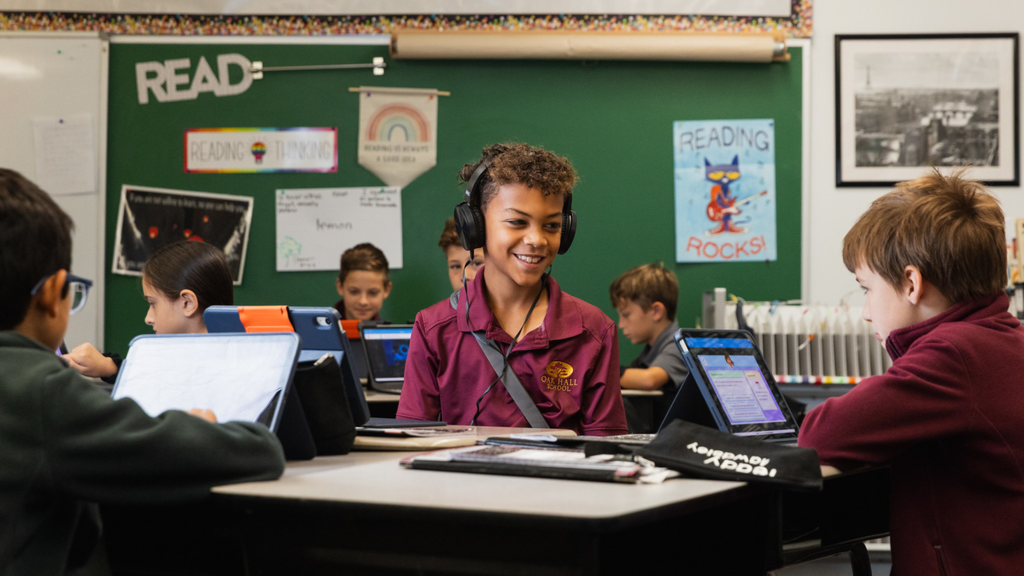
Oak Hall’s work began with its mission: a welcoming, diverse, and supportive learning community empowering students to pursue their academic, artistic, and athletic passions. The mission provides a steady point of reference when new tools or concerns enter the conversation. It keeps attention on the educational experience the school is trying to create and gives leadership a clear foundation from which to establish direction.
From there, the school focused on developing shared understanding. Faculty and staff spent time examining both the possibilities of AI and the questions it raises for schools. Issues such as academic integrity, privacy, misinformation, and overreliance became easier to discuss once people had a common language for the technology itself. Terms such as generative AI, hallucinations, and prompt engineering were introduced so that educators could participate in the conversation with greater confidence and precision.
Hands-on exploration deepened that understanding. When faculty members worked directly with AI tools, the discussion became more concrete. A demonstration showing how the same prompt can produce different resources for different grade levels, for example, naturally raised questions about quality, accuracy, developmental appropriateness, and instructional value. Those experiences moved the conversation beyond abstraction and helped educators connect emerging technology to the work they already know well.
Over time, that shared knowledge became an important foundation for schoolwide decision-making. Faculty and administrators are now able to approach developments with a clearer sense of both what AI can do and what the school wants learning to remain.
Building a Structure for Shared Leadership
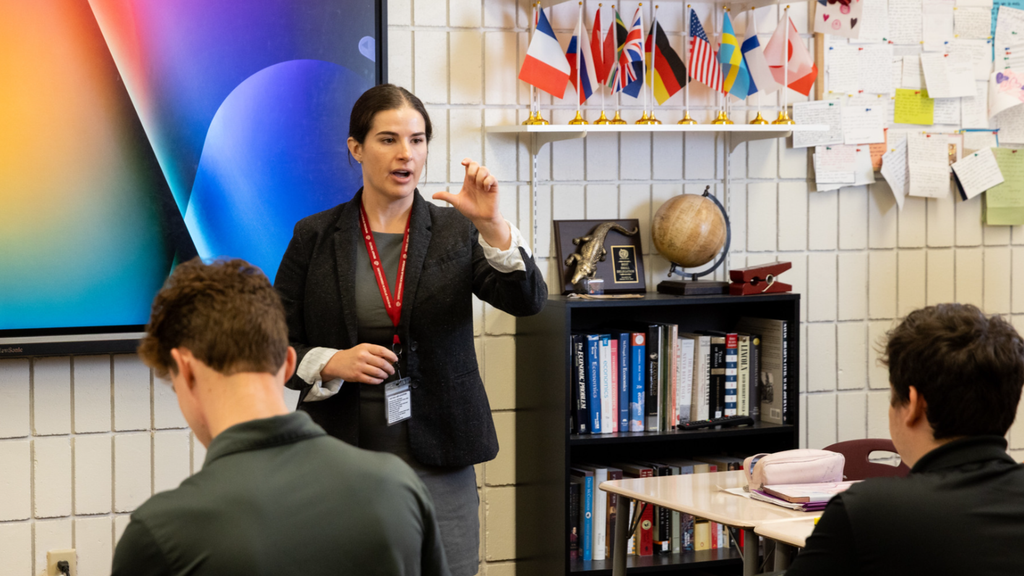
The design of Oak Hall’s AI Task Force reflects the belief that no single department can fully understand the implications of artificial intelligence for a school. The group draws members from across the institution, bringing together people whose work gives them different vantage points on the same questions. Subcommittees allow those perspectives to extend more deeply into academic divisions and other areas of school life.
The structure is intentional because AI issues often cross traditional organizational boundaries. A question that first appears in a classroom may eventually involve technology systems, institutional policy, family communication, or student support. Giving those intersections a regular place for discussion helps the school develop a more complete understanding before moving toward decisions.
“AI moves too quickly for schools to approach it through a series of isolated decisions,” says Dr. Karin Montini, Oak Hall’s head of school, who launched and led the task force before assuming her current role. “When I launched the task force, I wanted a structure that could hold the complexity of the work and connect perspectives that schools often consider separately. Its value goes beyond any single decision. It builds the institutional capacity to keep learning and deciding well as the technology changes.”
The monthly rhythm of the task force helps sustain that capacity. Meetings provide time to consider the school’s AI Position Statement, hear updates from working groups, discuss emerging tools, and identify what requires further attention. Operational questions also receive focused attention through a separate Tech Advisory Council, whose work includes schoolwide technology decisions and the implications of AI platforms.
The result is a distributed model of leadership. Knowledge does not reside with one administrator or one technology specialist, and responsibility for the work is shared across the institution. That becomes particularly important in a field where yesterday’s solution may not address tomorrow’s question.
From Principles to Practice
Early on, one of the task force’s central projects was to develop Oak Hall’s AI Position Statement. The document gives the school community a shared framework for understanding how artificial intelligence fits within its educational mission. Its development brought together perspectives on the school’s commitments, data privacy, and the responsibilities of the people who make up the community.
The first statement moved through task-force review and head of school approval before final edits were completed and the document was shared with the full school community. The process proved valuable in its own right. Putting the school’s thinking into writing required greater precision and gave faculty, students, and families a common reference point for future conversations. It also helped inform Oak Hall’s continuing work around responsible technology use.
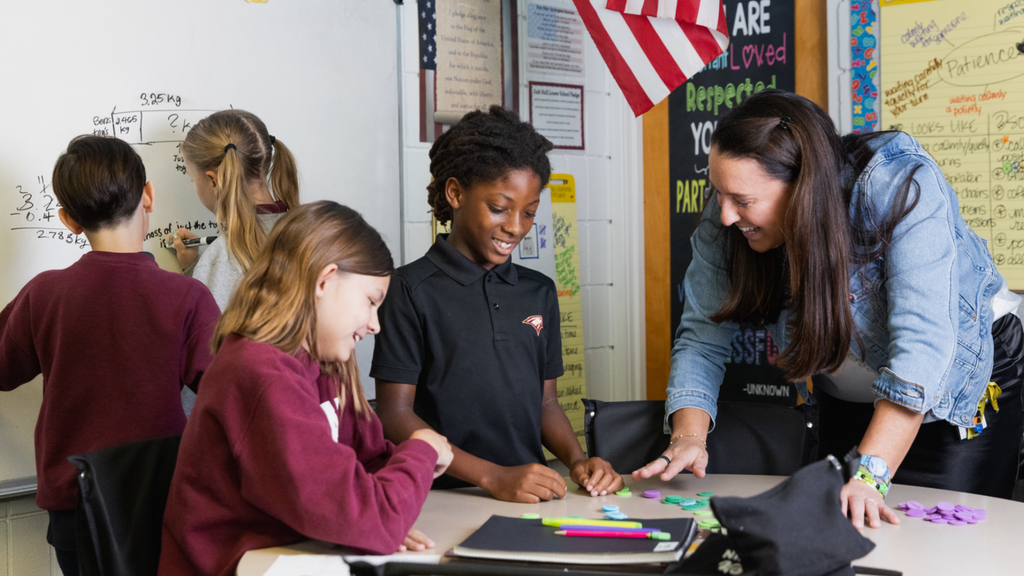
The same need for clarity appears in the classroom, where the appropriate role of AI depends on what students are being asked to learn. Oak Hall uses a five-level framework to help teachers define those expectations. At one end of the continuum, an assignment may require students to work entirely independently. Elsewhere, AI might support brainstorming, offer material for critique, or become an intentional part of the creative process. The framework gives teachers room to make those distinctions while making expectations visible to students.
A literary analysis essay, for instance, may be designed to demonstrate independent interpretation and writing, making AI inappropriate for the task. A statistics assignment can serve a very different purpose by asking students to evaluate AI-generated survey questions for clarity or bias. Between those points are assignments in which AI supports early-stage thinking or contributes to a larger creative process. What remains consistent is the expectation that students understand the role the technology has played in their work.
Transparency helps make that possible. Reflections, screenshots, or version histories can provide insight into how a student has used AI and how the work has developed over time. In this way, the school’s approach places attention on the learning process as well as the final product.
Listening as Part of the Design
Oak Hall’s approach continues to develop through feedback from the people closest to the work. Faculty surveys have revealed genuine enthusiasm about the potential of AI to support differentiation and make aspects of teaching more efficient. At the same time, teachers have expressed concern about academic integrity, students becoming too dependent on the technology, and the time educators need to learn new tools thoughtfully.
Those responses have helped the task force identify where further guidance or professional learning would be most useful. They also keep the school’s decision-making connected to classroom reality. As faculty members gain experience, their feedback becomes more nuanced, allowing the school to refine practices in response to what teachers are actually seeing.
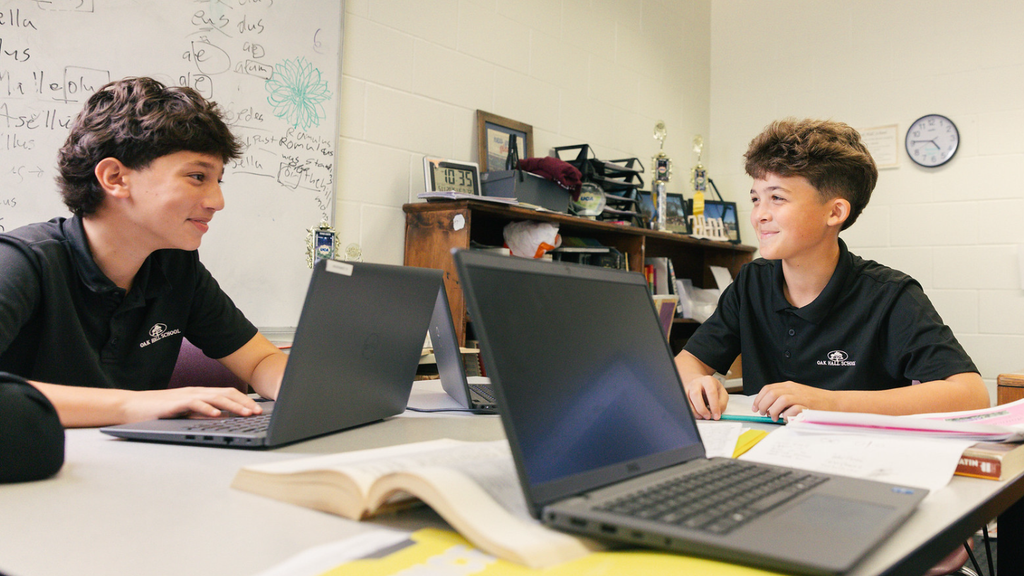
Students contribute another important perspective. Oak Hall has established Middle and Upper School Student AI Advisory Councils, with teacher-nominated students representing each grade level. Their participation gives the school a clearer view of how students encounter AI in their academic lives and creates opportunities for students to contribute to discussions that directly affect them.
That attention to student experience also informs curriculum. Teacher workgroups have developed Technology and AI Benchmarks across the divisions, with additional review from learning specialists and school leaders. The benchmarks place AI within a broader understanding of digital literacy and help establish a developmental progression as students move through the school.
Taken together, these feedback structures allow Oak Hall to learn from implementation rather than treating implementation as the end of the process.
Developing Professional Capacity
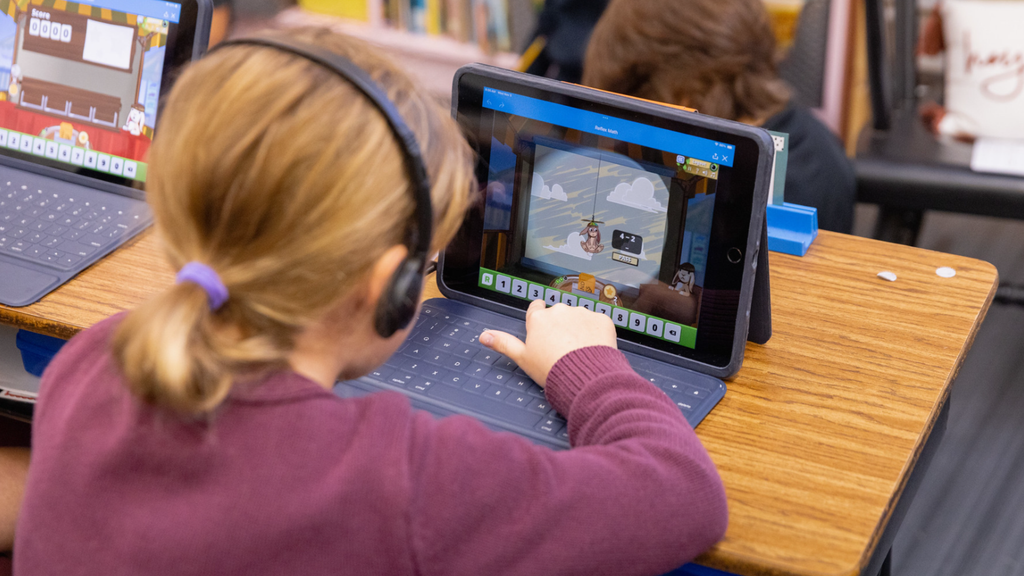
Professional learning plays a central role in sustaining the work. Oak Hall provides faculty with a range of opportunities to deepen their understanding of AI, including external learning experiences and school-supported professional development. Faculty members enter the work with different levels of experience, so the emphasis is on building capacity over time rather than expecting everyone to progress at the same pace.
Experience with the tools changes the character of professional conversation. Once teachers understand what AI can produce, their attention begins to move toward more consequential instructional questions. They consider where student thinking needs to remain visible, how technology might deepen a learning experience, and what evidence will demonstrate genuine understanding.
“The quality of the conversation changes when educators have firsthand experience with the tools,” says Jess Jung, Oak Hall’s technology integration specialist. “As teachers experiment, their questions become more pedagogical and more precise. They begin thinking carefully about where student reasoning should remain visible and how AI can support the learning process without obscuring it.”
That progression matters because durable AI practice depends on professional judgment. The specific tools available to schools will continue to change, yet the ability to evaluate them thoughtfully is far more enduring.
Oak Hall has also found value in learning from peer independent schools. Conversations with other educators provide perspective that is difficult to gain from product demonstrations or articles alone. Site visits have been particularly useful because they allow faculty members to see how another school’s ideas function in practice and to consider which elements might translate to their own context.
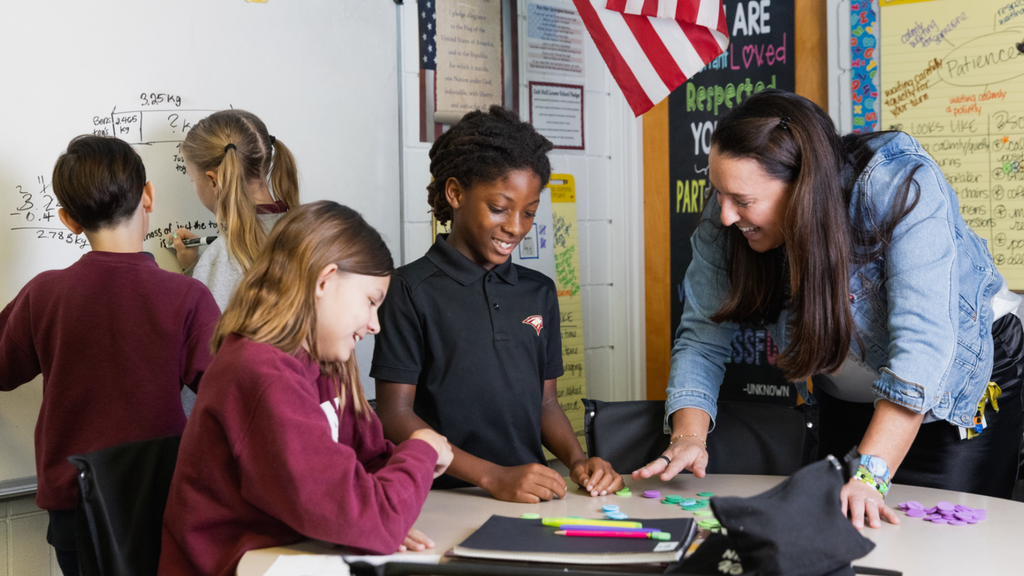
The lessons emerging from Oak Hall’s work consistently return to participation. Faculty engagement improves the quality of implementation, while student involvement reveals aspects of the experience that adults may otherwise miss. Learning from peer schools adds another source of perspective and helps the community continue to question its own assumptions.
Designing for Continued Change
Oak Hall continues to build on the work of the task force. Professional learning remains ongoing, and the school is expanding opportunities for students and families to participate in conversations about AI. An AI book study and continued review of emerging tools provide additional avenues for learning, while the school plans to revisit its Position Statement and committee structures as the work develops.
That willingness to revisit earlier decisions is central to the model. Artificial intelligence will continue to change, and schools will encounter questions that are difficult to anticipate today. A standing structure for discussion gives Oak Hall a way to engage those developments through an established process, with people who already understand the school’s priorities and the history of the work.
For schools beginning their own conversations about AI, the Oak Hall experience suggests that the most important early investment may be organizational rather than technological. Clear leadership creates direction. A representative structure broadens the perspective. Sustained learning allows the community to develop judgment over time. Together, those conditions make it possible for a school to respond with greater coherence as the landscape shifts.
The future of artificial intelligence in education remains unsettled. Oak Hall’s task-force model does not depend on knowing exactly what that future will look like. Its strength lies in giving the school a disciplined way to keep learning as that future takes shape.