
Teacher recruitment and retention is a top challenge for one third (32%) of SAIS heads of schools (Pulse Survey, March 2026). In the SAIS report The First Years Matter: Research Insights on Early Career Educators, recommendations to increase faculty satisfaction include providing better support with clear growth pathways, facilitated community-building opportunities, and recognition/feeling “seen.” At the Randolph School, our orientation and mentoring program is designed to do just that, with an intentional focus on embedding new faculty into our school community from the outset.
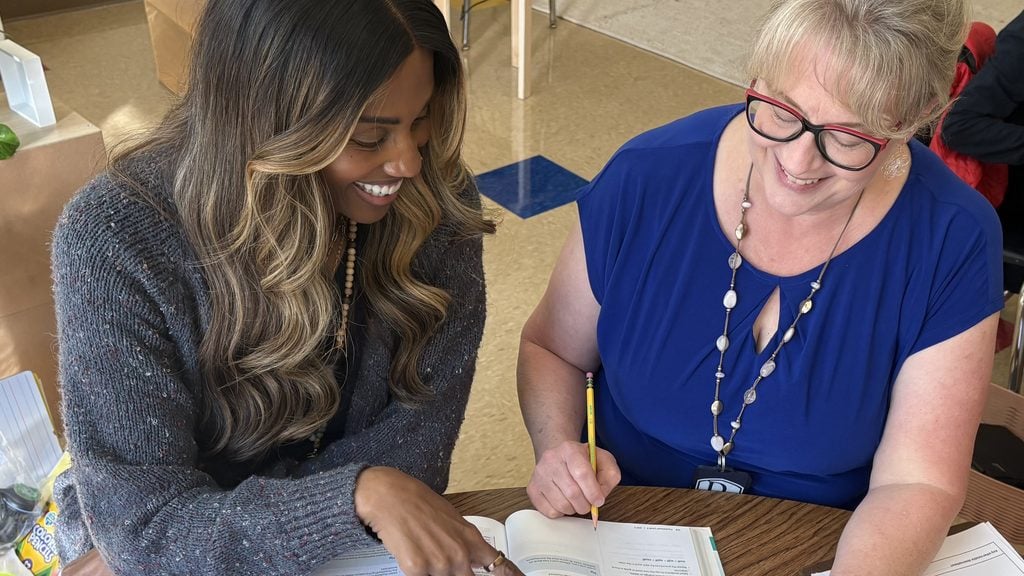
Welcoming New Faculty With Intentionality
Randolph’s previous interactions with new faculty could be described as “onboarding,” covering topics such as HR requirements and information delivery. With a new dean of faculty position, filled by Allyson McCloud, and new co-directors of mentoring, Catherine Beck and Kathleen Brewer, we wanted the model to be centered around engaging experiences and continued support through mentoring. Our primary goals became describing the value of community at Randolph and ensuring that new faculty felt that they were part of that community.
We made a shift to intentionally limit our onboarding process, which we call orientation. We rate an orientation as successful if new faculty can make it through the first two weeks, feel empowered to ask questions, and know who to contact to ask those questions.
The Orientation Process at Randolph School
- During the interview, candidates receive an overview of the first two years as a new faculty member.
- Once a new faculty member signs the employment contract, they receive a welcome email including mentor information and save-the-date reminders for tech training and orientation. The mentor reaches out to welcome them, which can range from a simple email to an initial meeting for coffee or lunch.
- Over the summer, the school provides support for moving into the local area, help with HR issues, connections to other faculty members, and access to classrooms and resources.
- During late summer, new faculty receive their computers and attend tech onboarding.
- Just before school begins, new faculty attend two days of New Faculty Orientation; during the first day, they have lunch and participate in activities with their mentors.
- During the first week of the school year, mentors check-in daily with their mentees.
- During the first month, mentors schedule weekly meetings with mentees. Then meetings continue biweekly throughout the first year.
- The New Faculty Cohort meets five more times over the course of the school year. During these meetings, we aim to
- Provide just-in-time information;
- Reinforce Randolph values and classroom expectations;
- Continue building community;
- Celebrate accomplishments.
- We schedule formal co-director check-ins each semester with both new faculty and mentors.
- Each new faculty member takes two professional days (one during second quarter and one during third quarter) to visit the classrooms of other Randolph faculty.
- At the end of the year, new faculty reflect on the year, set professional goals, and offer feedback for the mentoring program.
- Throughout the year, the first-year faculty professional growth cycle is unique to this cohort; our expectation is that they experience the first year and find their place in the Randolph community.
- The cohort remains close throughout their time at Randolph.
During orientation, we model three of Randolph’s core values: relationships, curiosity and a growth mindset. We intentionally create opportunities for our new faculty members to meet the community, including established teachers, current students, and administrators. We encourage new faculty to be curious and to ask questions, and we directly teach high-priority expectations, such as communication with students and parents.
The welcome new faculty receive at orientation and their initial impressions set the stage. By making the community available to them, we encourage connection and belonging.
Mentoring & Cohorts
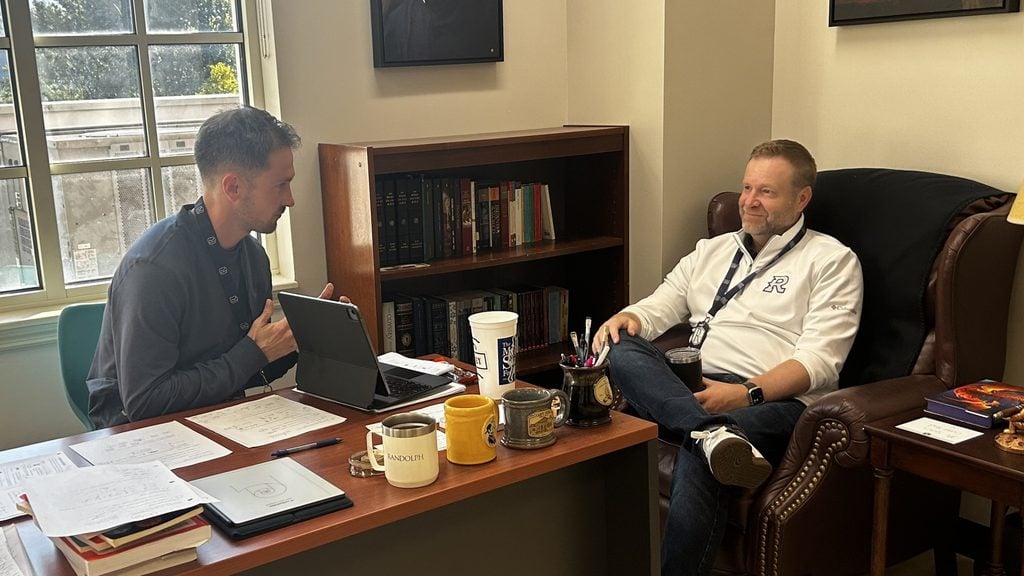
Each new faculty member has an assigned mentor with a set, consistent meeting time, so no one stays lost. Mentors can look ahead and anticipate times in the school year or situations in which new faculty members might need extra support, such as when a schedule changes. The co-directors of mentoring also provide an additional layer of support to both the mentors and new faculty.
During orientation, we guide the group to create norms that will inform the way we relate to each other throughout the year. As we design our meetings, we aim for engagement and active participation and try to model classroom pedagogy by including activities and discussion protocols that our faculty can use, such as Chalk talks, turn and talk, or the Four A’s.
Ongoing cohort gatherings give new faculty a soft place to land, help them to feel connected, and provide support as needed throughout the year, such as when report card comment-writing season begins.
We set aside time during the school day for cohort meetings. As a school, Wednesday mornings are designated for professional development, with a late start for students, who begin their day at 9:00 AM instead of 7:30 AM. Cohort meetings neither cut into new faculty members’ personal lives nor into valuable classroom or planning time. Also, we feed them!
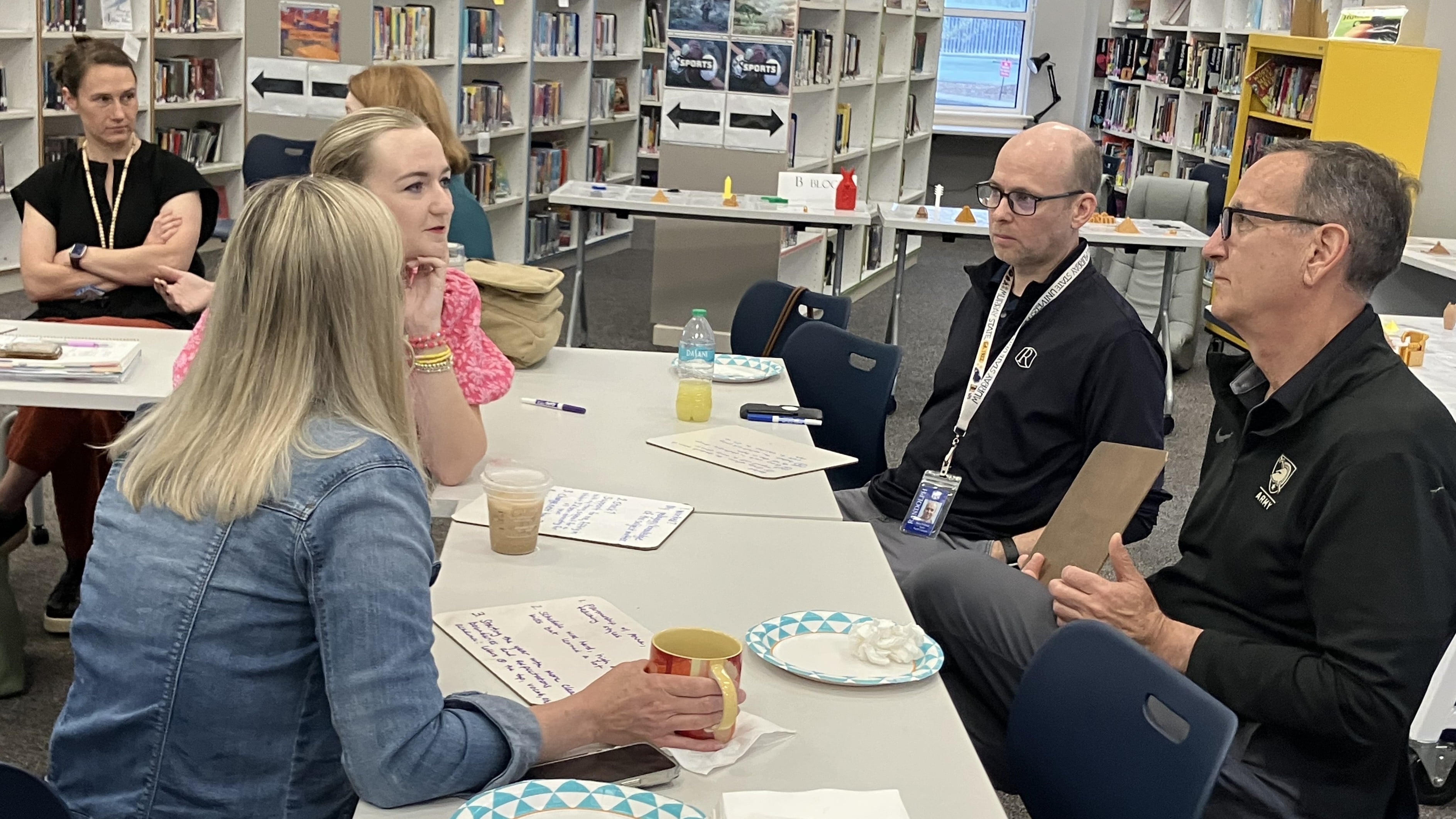
Classroom Visits Enhance the Mentoring Experience
Although we require that each new faculty member take two professional days during the year to visit other classrooms, they have the agency to choose what they would like to observe. Once they have chosen from among topics such as classroom management, curricular alignment, or strategies for delivering content, we guide them to classes to visit.
These visits reinforce classroom expectations and norms and help define the culture of the school for our new faculty members. While they are learning about their area of interest, new faculty also see students in different classroom environments and how they interact. In addition, classroom visits allow new faculty to connect with others in their department or team.
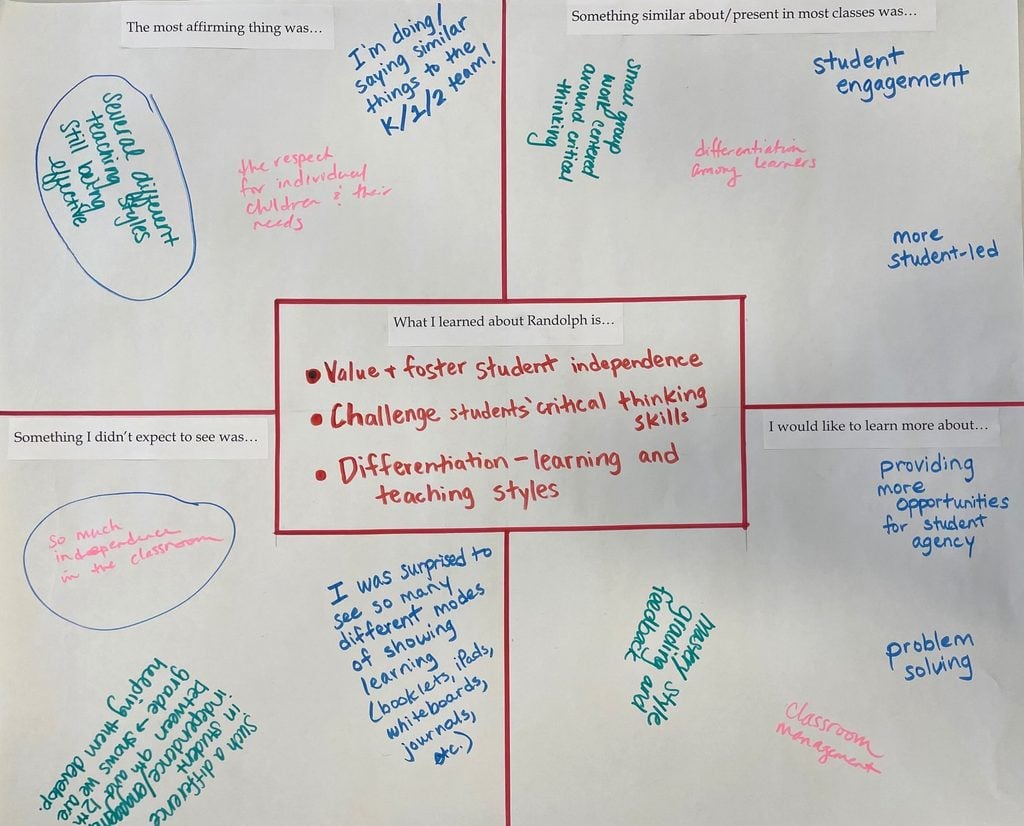
After each round of visits, we ask new faculty to bring their observation notes to our next cohort meeting. We use questions to guide them to reflect independently. Then we group faculty heterogeneously across divisions and disciplines through which they complete a placemat activity then return to the whole cohort and share out their learning.
Supporting New Teachers Beyond the First Year
In the second year, our faculty members remain in small, deliberate cohorts, providing a consistent, cohesive group to lean on. We also encourage second-year faculty to continue building connections throughout the wider Randolph community.
Dedicated professional growth leaders walk each second-year cohort through the professional growth process for the first time. The second year program begins by building on the professional goal each new faculty member set at the end of their first year.
During their third year, our newer faculty join our veteran faculty, gaining access to multiple pathways for their professional growth. By intentionally matching small groups of faculty to members of administration, we create a personalized program.
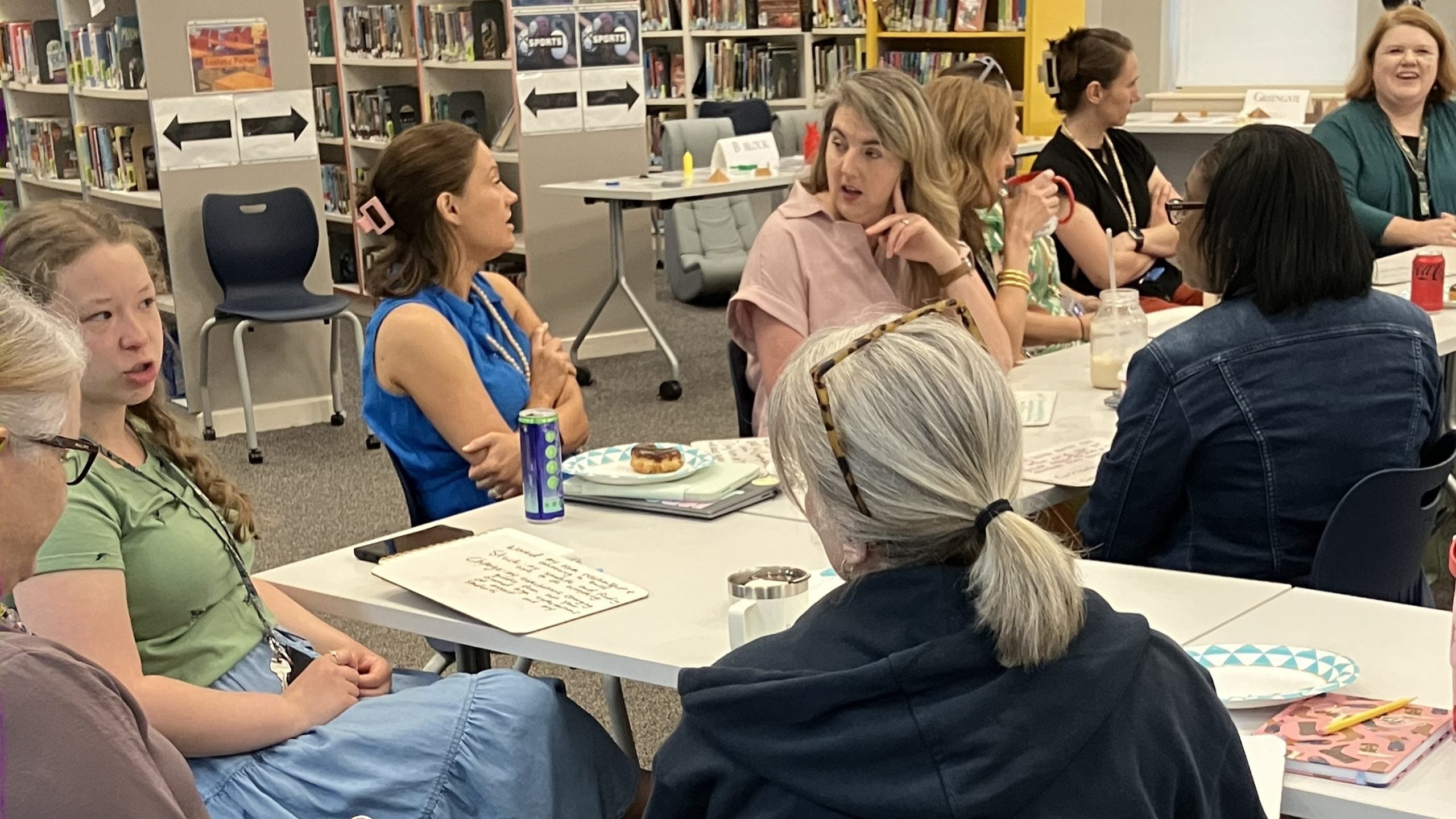
Building & Sustaining a Community of Mentors
After a few years, we realized that we relied on the same people year-after-year to serve as mentors, which could lead to burnout. We shifted to a team model, with each team member committing to serve for three years. Depending on the needs of our new faculty numbers each year, members of the mentoring team may or may not be active mentors at any particular time during their team tenure. This alleviates the burnout issue and allows for swaps in mentors as needed. In addition, since we make efforts to help new faculty members build community connections, new faculty feel empowered to seek out additional support.
We create our mentoring team by considering individuals’ characteristics and personalities. We look for people with a strong understanding of Randolph’s culture and attempt to match new faculty with a mentor who will have both the background – across different grade levels, divisions, and departments – and personality to best support and complement them.
Mentors attend a half-day training session during the summer, which includes setting expectations about the role of a mentor, a brief overview of best practices of andragogy, and guided practice with common challenging mentor-mentee scenarios. During the year, we send a biweekly email to mentors with reminders, conversations to be had, information to deliver, and resources.
One of the biggest changes we made to the mentoring program was the introduction of a mentoring stipend. Although the stipend is nominal, mentors are remunerated for their time and service, which demonstrates to our community that Randolph values the work.
Finally, professional observations of new faculty, which are conducted by division heads, are completely separate from the mentoring program. Mentors, co-directors of mentoring, and the dean of faculty only observe new faculty members when the new faculty member has requested such support.
Evaluating Your Mentoring Program
To keep our mentoring program strong and robust, we ask for formal feedback from new faculty consistently: at the end of onboarding, during the first cohort meeting, and at the end of the first year. We also request annual feedback from mentors. We evaluate the feedback annually and make changes to the program as needed, such as when we established the mentoring team or when we changed the presentation by the advancement team to a less formal set of small-group discussions.
We encourage schools to avoid front-loading too much information during onboarding, especially if this promotes “sit and get”-style sessions. First-year faculty are unlikely to remember all of the information, especially if they sit for eight hours at a stretch.
To sustain a strong mentoring program, leaders must be open-minded, empathetic, supportive, confidential, neutral, and nonreactive; new faculty bring a new perspective to your community that is worth considering. Finally, establish and understand what is and what is not within the scope of responsibility of the mentoring team. There will be some things that affect the happiness of new faculty that are outside of your circle of control or your circle of influence.
We know the program is working at Randolph because good people stay. We’re providing the clear growth pathways and facilitated community-building opportunities that not only welcome new faculty into our school, but also help them to feel known and seen within our community.