
Setting annual tuition is a complex blend of mission, market positioning, and financial strategy. Tuition & affordability is top of mind for SAIS heads of school and is an increasing concern (up 22.6% year over year, SAIS pulse survey). Of the top five challenges keeping heads up at night, three are centered around finance and enrollment: annual fund & capital campaign support, financial position & resource demands, and enrollment management (SAIS pulse survey).
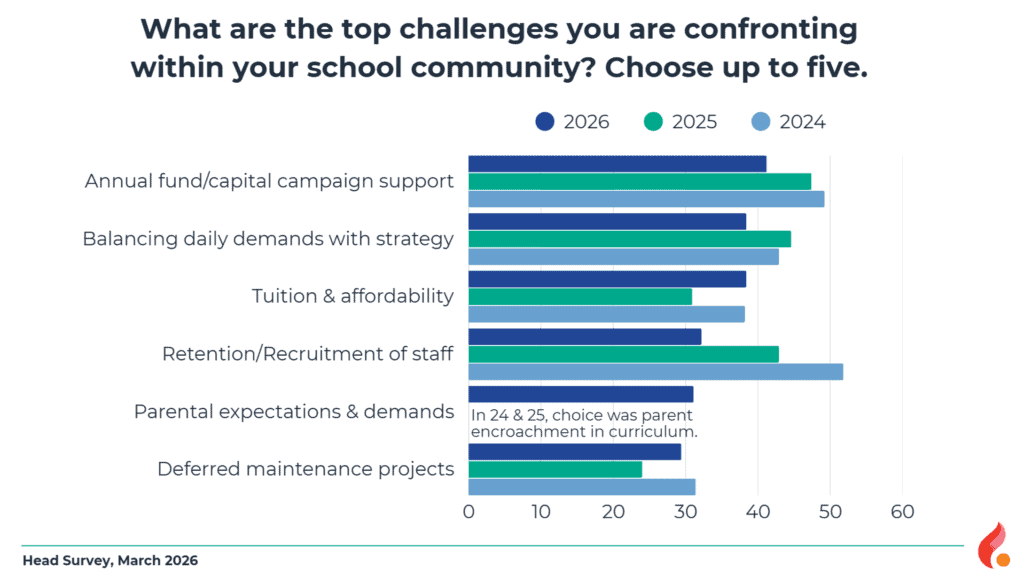
All schools, regardless of size, share some level of concern over financial operations, which includes annual fund/capital campaign support, tuition & affordability, financial position & resource demands, and current/deferred facility maintenance. Particularly, tuition & affordability is top of mind for small schools (40%), as well as medium (39.2%) and large schools (39.5%), with one-fifth of extra-large schools challenged in this area (20%).

Tallulah Falls School, located in Tallulah Falls, GA, is a co-educational boarding and day school serving more than 500 students in grades 4-12. The school implemented a tuition lock program during the 2013-2014 academic year. Here, the school shares how this model provides predictability and security for families while simultaneously demonstrating the school’s goal to provide a top-quality education without making money a priority.
Tuition Lock In Practice
For students at Tallulah Falls, tuition is locked at the rates advertised for the year the student enrolls, with separate rates for lower, middle, and upper school. When lower or middle school students advance to the next division, the new rate reflects the tuition pricing at the time of the student’s initial enrollment year.
While tuition is locked for current students, TFS increases tuition annually by 5% for new students entering the school. This allows the school to maintain financial health, offset rising operational costs, and continue offering competitive programs.

The tuition lock allows families to save money on their child’s tuition by not incurring annual tuition increases, which is communicated on annual tuition statements as the “Tuition Freeze Discount”. Families can clearly see the annual savings and can plan long-term, knowing that their tuition cost for each child will never exceed their “frozen” rate.
In addition to the savings from the tuition freeze program, families are eligible for need-based financial aid. All families requesting need-based aid must apply annually for financial aid through the Clarity application process. If a family’s income remains relatively stable, they will not see much change in their financial aid award.
From Experiment to Implementation
Initially, the tuition lock was introduced as an experimental, one-year initiative, with the school hoping that by testing the model and communicating transparently with both current and prospective families, it would result in long-term success. Parents were very receptive.
During its initial roll-out, President and Head of School Dr. Larry A. Peevy shared, “Our parents and students stood by us through growing pains, as we have tripled our enrollment in less than four years. Indeed, their supportive voice in the local community has greatly contributed to our success. We see this tuition freeze as a way of saying ‘Thank you’ to our families for their efforts on our behalf and as a way to give them some financial certainty in their budgets during these uncertain times.”

The school acknowledges that there were risks to this model, including potential short-term loss in revenue and uncertainty about long-term sustainability. However, what may have been lost in minor revenue the school gained in family satisfaction, retention, and enrollment stability.
Building the Model
A critical factor in making this model viable for TFS is continued support from a private foundation, which gave the school the confidence and stability to move forward. The school financial model today is supported by several sources:
- Tuition revenue.
- Fundraising efforts, including the annual Tallulah Fund and the Twin Rivers Challenge – a bike ride supported by donors from the community. This is an annual fundraiser with all proceeds supporting scholarships.
- Foundation support.
- Programs such as state educational funds (e.g., the Georgia Education Expense Credit and the Georgia Promise Scholarship).
Importantly, TFS has not had the need to draw on additional funds beyond expected sources, which speaks to the model’s sustainability.
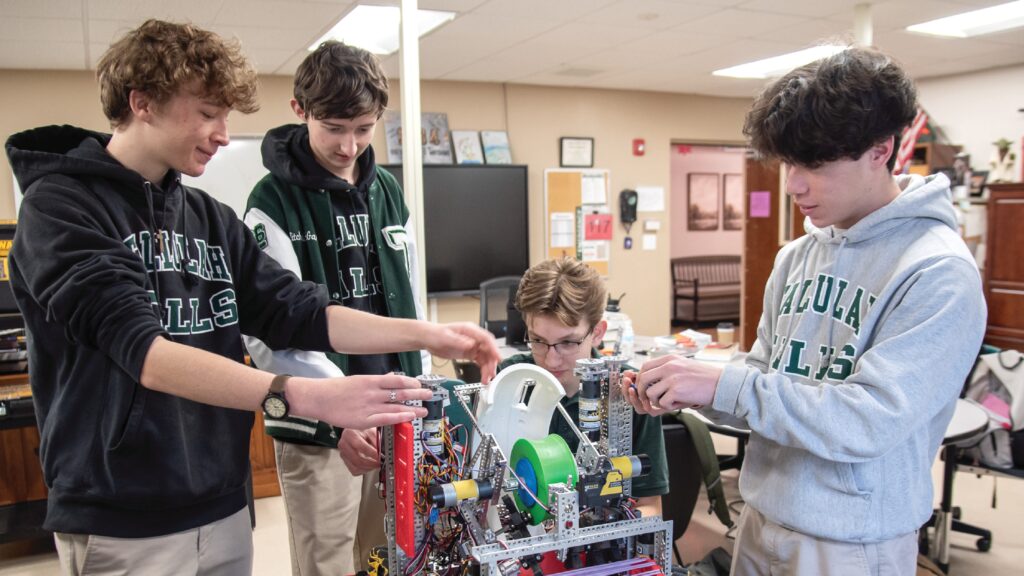
The most significant impact has been on retention, which is now up to 93%. While the tuition freeze is a helpful recruitment tool, its greatest strength is in retention and long-term family trust. Families report greater confidence and satisfaction, with the program reducing financial uncertainty and stress.
TFS saw steady enrollment growth in the first 6-8 years of the tuition freeze program, with enrollment remaining steady since. The school, which offers day and boarding programs, has seen the international population expand from 15 to 34 countries, stabilizing total enrollment at approximately 500 students.
Communicating With Families
Initially, the tuition lock model was difficult to understand. Because it was new, it took time – often a year or more – for families to fully grasp its long-term value. Clarity is critical and challenging. The model is not one-size-fits-all and requires consistent communication, repetition, and real-life examples
It’s not immediately intuitive, but once families experience it, the value becomes clear. Over time, families recognize the significant savings and gain confidence in planning for their children’s education.

One parent shares, “We want the best for our kids, and the tuition freeze gives me peace of mind knowing I can afford the education we want to give our children.”
Of the program, another parent says, “Having three children enrolled at the same time, the tuition freeze has truly been a blessing for our family. Knowing exactly what tuition will be, both now and in the future, gives us the ability to plan and budget with confidence. It allows us to think ahead, especially as our youngest prepares to join the school eventually. That kind of financial stability makes a significant difference for our family.”
Lessons Learned
This model should not be implemented in isolation. TFS encourages schools looking to explore this model to note this is not a “golden goose” but one tool among many.
- Ensure your school has a strong, stable financial foundation.
- Have reliable revenue streams in place.
- Consider external support (such as a foundation) if possible.
- Treat a tuition freeze as one part of a larger strategy, not a standalone solution.
- Do not overlook programming. Success depends on having strong academics, excellent faculty, robust programming (athletics, arts, extracurriculars), and a compelling overall student experience.
The tuition lock works because it is part of a larger, high-quality educational package. It enhances what already exists and does not replace the need for excellence across the board.
One adjustment Tallulah Falls School made over time involved families with multiple children enrolled at the school. Originally, TFS applied the same locked tuition across siblings. However, the school revised that approach so that each child’s tuition is based on the rate(s) in effect at the time of entry, which more accurately reflects current costs.

The best part of the “freeze” is that the amount of savings each family receives continues to equal what the school would have awarded in financial aid each year but is palatable to families of various income ranges.
TFS is pleased with the program and plans to continue offering it. It provides families with financial stability, long-term planning ability, and significant savings that can be redirected toward college and life expenses.
Most importantly, it strengthens trust and reinforces the school’s commitment to supporting families throughout their educational journey while creating a culture of partnership.