

When prospective teachers arrive to the campus of the Atlanta Speech School to initially meet with Executive Director Comer Yates, the conversation often begins with a simple ask: “Tell me about a student who changed your life.”
The answers of teachers who join the Speech School faculty often center on a child they could not yet reach. They reveal a story of someone the teacher feels they let down, often because the teacher didn’t yet know enough or possess the training and more necessary skills at the time. These moments linger in teachers’ minds, clarifying purpose and becoming a promise.
Teachers are drawn to the Speech School, seeking a place where they can live out that promise, led by their own intrinsic motivation. This motivation to learn more is not only honored, but facilitated, given structure, support, and the opportunity to grow.
Expanding the Mission
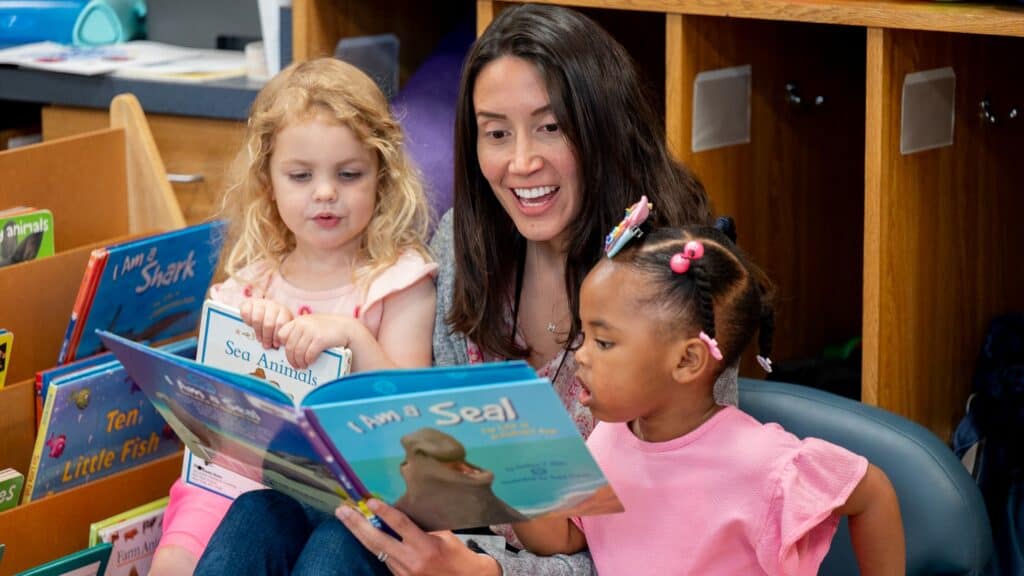
Now in its 88th year, the Atlanta Speech School began as a free school for children who were deaf and hard of hearing, at a time when few educational options existed. The founding commitment remains in practice today, which means that no student in need of services is turned away because of a family’s financial circumstances.
On campus, programs serve children ages two through elementary grades whose neurobiological differences can affect how they develop language and learn to read: the Wardlaw School is designed to support children with dyslexia; the Katherine Hamm Center supports children who are deaf and hard of hearing; and Stepping Stones is designed for children with speech and language delays. The Anne & Jim Kenan Preschool brings children together in an inclusive environment, creating opportunities for shared learning and community with the other preschool classes.
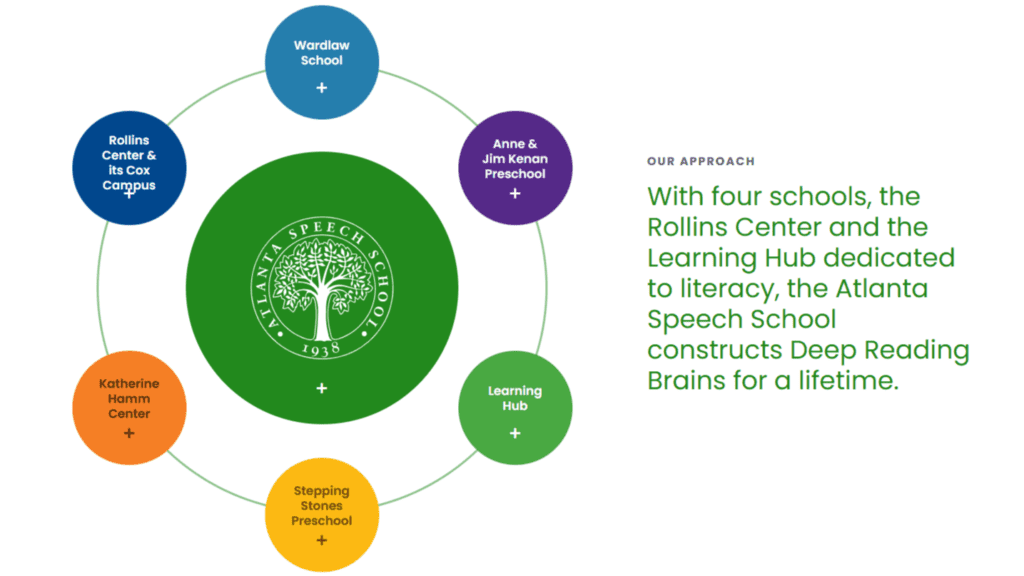
Across all programs, the goal is the same: to build each child’s deep reading brain – that is, the ability not only to decode text, but to understand, question, and think critically and to develop the self-determination that allows children to become who they are meant to be.
The school works to ensure that every teacher shares a working understanding of how the brain develops for language, literacy, and self-regulation. Before they begin teaching, new faculty are encouraged to engage with Cox Campus courses, beginning with Build My Brain, developed with the Harvard Center on the Developing Child, along with the School’s “trailers” The Promise and Every Opportunity.
Together, these resources introduce the science that undergirds the school’s daily practice and help teachers make it actionable in every interaction with a child. This foundation is strengthened through the daily life of the school, where teachers work alongside colleagues who test ideas, deepen their expertise, and contribute to a growing body of knowledge. Professional learning is not an add-on; it is core to the culture and the work itself.
In 2024, the Speech School strengthened this commitment through the Goizueta Endowment Fund for Staff Support, created to expand time and funding for continuing education. Alongside ongoing coaching and development, this investment helps ensure that teachers are supported not only in serving the child in front of them, but also in extending what is learned with each child to benefit every child beyond the physical campus.
Making an Impact Beyond the Classroom
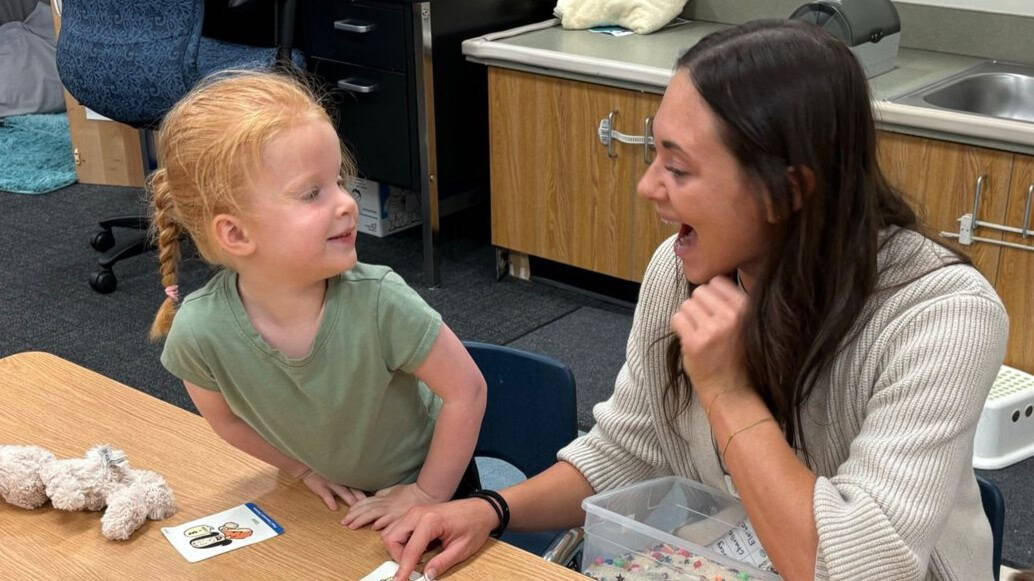
Over time, the Speech School has built its teaching community with teacher autonomy in mind. In the Wardlaw School for elementary-aged children with dyslexia and the three preschools, Atlanta Speech School seeks educators who are driven by the work itself and who reflect upon, refine, and continuously deepen their practice in service of children. They understand the responsibility they carry in shaping a child’s trajectory and are committed to doing that work better each day.
What distinguishes the Speech School is that its promise to each child does not end in a single classroom. As the nation’s most comprehensive center for language and literacy that functions as a teaching hospital for education, the school connects daily practice to a larger movement toward its vision: literacy and justice for all.
Its expertise is not confined to its physical campus. It is continually refined and shared through integrated teams that prepare student reports together and through the Rollins Center for Language & Literacy, the school’s professional learning center, which translates the precision of on-campus practice into training and resources for educators. In this way, the expertise staff bring to helping children with neurobiological differences beat the odds is leveraged to change the odds for children far beyond the school’s physical campus. Through Cox Campus, the school’s free online platform, that learning reaches more than 400,000 educators across all 50 states and 138 countries.
At the Speech School, teaching is never only about the child in front of you, important as that is. It is also about building knowledge, sharing expertise, and advancing a future in which every child, everywhere, has access to the kind of instruction that allows them to find their voice.
Meaning Matters for Faculty
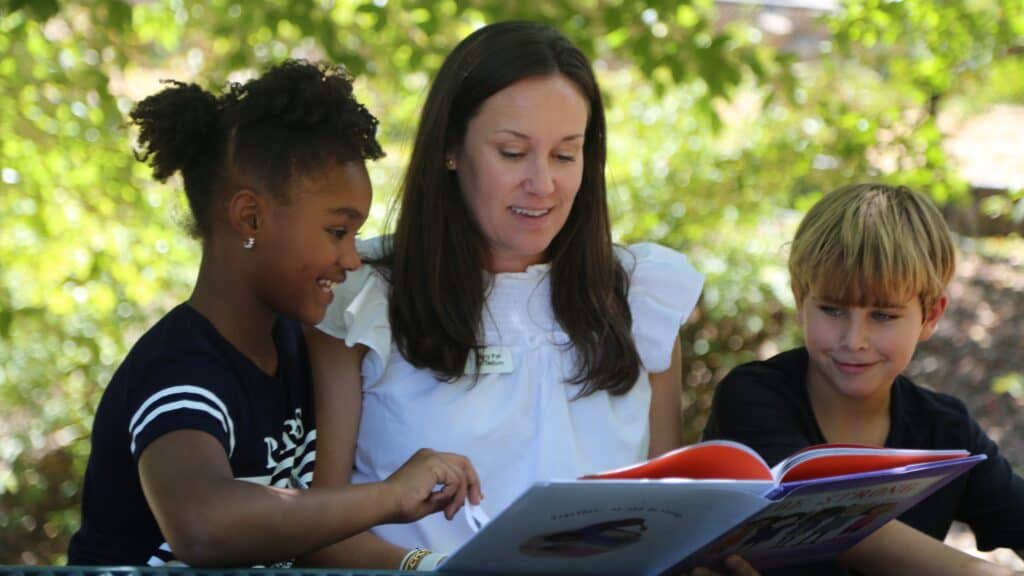
SAIS research indicates that community & culture, students, and colleagues & relationships play an important role for teachers in the decision to remain with a school community. At the Speech School, teachers find purpose in helping children with differences beat the odds against literacy, providing the opportunity for children to determine their own future and make the most difference in the lives of others.
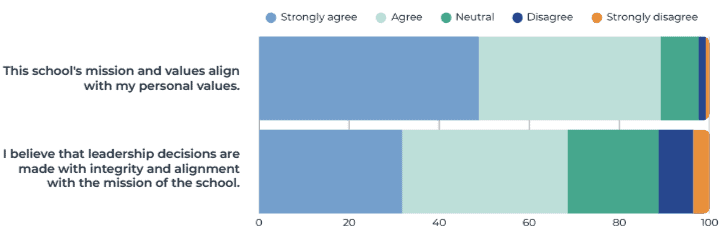
Source: SAIS Motivation and Engagement Survey
At a time when teacher retention is a major challenge across education, anecdotal and qualitative feedback at the Speech School, along with staff surveys, suggests that this broader sense of purpose matters. Teachers describe deep satisfaction in knowing that their daily practice contributes not only to the progress of one child, but also to a shared body of knowledge that can benefit children far beyond campus. That sense of collective impact, paired with a culture of collaboration and professional trust, helps foster strong faculty commitment and a distinctive professional culture at the school.
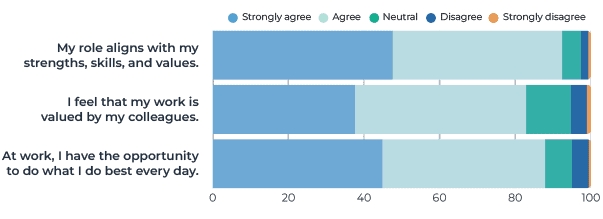
Teachers work alongside colleagues who share a commitment to bring the greatest possible precision and fidelity of the science to each child they serve. These teachers reflect together, test ideas, and contribute to a growing body of knowledge about language and literacy. They can access Cox Campus and the experts who contribute to its content, and they can influence the content to impact others.
The Atlanta Speech School continues to organize its work around a simple idea: when teachers are trusted to pursue their purpose, supported in deepening their knowledge, and given the opportunity to extend their impact, they do more than teach. They fulfill a promise, and, in doing so, they change what we should require of ourselves for children everywhere.
Source: SAIS Motivation and Engagement Survey
Thank you to Atlanta Speech School Director of Communications Catherine Sabonis for contributions to this article.