
As the pandemic has passed, COVID remains, as do the unmet learning needs of millions of America’s students.
With the unprecedented federal investment in our nation’s public schools waning at the end of the academic year, the opportunities—and need—for independent schools to support more of our nation’s youth is likely to only become clearer.

Yet the challenges students are facing are multi-faceted. They range from mental health challenges to challenges in executive function, agency, academics, and more. For many independent schools, their traditional models may not be fit for serving many of the needs that students present.
What’s more, the struggles that were facing many independent schools prior to the pandemic may be rearing their head again—challenged business models and pricing that precludes many students from enrolling.
Taken together, the troubles afflicting students and schools could be seen as a grave threat.
And yet, if schools can look directly at that threat and then shift their viewpoint, they may be able to seize the current moment as an unprecedented opportunity to do more good for more individuals.
Research by Clark Gilbert, a former president of Brigham Young University Pathway Worldwide and BYU-Idaho, shows why and how. Gilbert found that when there was a “discontinuous” change—an abrupt event in the environment—an organization was able to marshal far more resources to meet the challenge when it initially framed the change as a threat.
But organizations couldn’t leave it in that threat framing. Although framing something as a threat caused an organization to marshal the resources to tackle a challenge, it also caused organizations to respond with something called “threat rigidity.”
When this paralysis sets in, an organization doubles down on its existing processes. That results in more top-down control; reduced experimentation at precisely the time that an organization needs to be experimenting more to adapt to new circumstances; and a focus on an organization’s existing resources, rather than questioning what else it might use to respond to the threat.
When Gilbert studied this in the newspaper industry during the early rise of digital media, he found that organizations that saw the internet as a threat marshaled resources, but “most sites simply reproduced the newspaper” online.
This helps explain what we’ve seen from many schools over the past few years. Learning loss, reduced enrollments, and more are threats to schools. That has marshaled resources—unprecedented federal dollars, for example. But it’s also caused most schools to batten down the hatches and try to get back to business as usual, without tackling more fundamental questions around what the teaching and learning experiences should look like.
Gilbert’s work suggests a way to escape threat rigidity.

After defining something as a threat to muster resources, it’s important to shift responsibility to a new independent group that can reframe the threat as an opportunity. In this case, that opportunity is to reimagine the schooling experience.
If there isn’t at least one person in the school system whose full-time job is to focus on the opportunity at hand and innovate, then it’s no one’s job. That’s because the day-to-day priorities of the organization will drain energy away from any efforts to create something new and different.
In other words, the urgent and immediate tasks in front of someone—even if they aren’t important in the long run—will almost always drown out the important but less urgent work of long-term transformation.
Gilbert’s research highlights the benefits of an organization creating a separate entity that has ties back to the parent group for the sharing of certain resources.
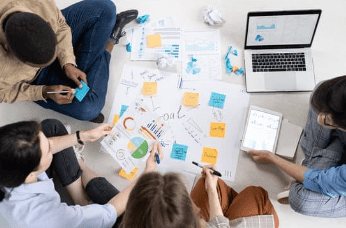
What might this look like in an independent school context? Imagine raising philanthropic dollars to launch a school within a school, a novel after-school program open to the community, or a microschool, much as Lakeside School in Seattle did with the Downtown School. Or look at how the Mount Vernon School launched Mount Vernon Ventures to support and collaborate with schools around the world.
With this entity in place, the school could then allow educators to build new offerings that serve new students, for example.
Educators could use the autonomy to consider anew their goals for the students they are serving, as well as the range of factors they will need to take into consideration in order to help them with their challenges—but also to unlock opportunities in their lives.
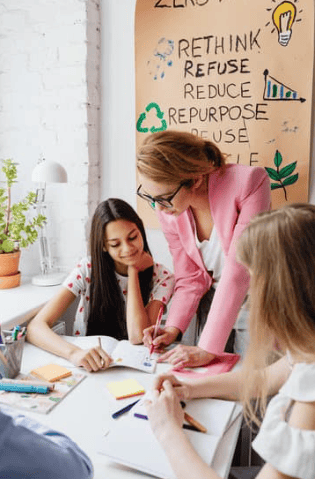
That means considering what students will need in terms of academic content knowledge and skills, but also what they’ll need in terms of an integrated approach to building habits of success like agency, self-efficacy, growth mindset, and more. It means an exploration of how to foster real-world experiences and the intentional building of social capital. It will also mean considering the underlying health, wellness, and other basic needs students will require to thrive.
From there, educators could explore mastery-based learning models in which educators can better personalize learning and help students experience success and meaningful progress on a daily basis. They could experiment with more sustainable and flexible teaching models that allow teachers to co-teach and provide students with more support. They could explore using technology—from AI to virtual reality—that saves teachers time, extends their reach, and deepens their understanding of their students. Technology can also improve student feedback, offer experiences hard to provide in the immediate physical environment, and automate manual, laborious processes for teachers and administrators.
And above all, they should rethink the notion that a one-size-fits-all school system that pits students against each other in a zero-sum competition is the right answer for developing students and supporting parents.
The world with which students will grapple as they graduate from primary and secondary school is complex and dynamic. As a society, we’ll need all of them to learn how they can contribute and fulfill their human potential to make the world a better place.